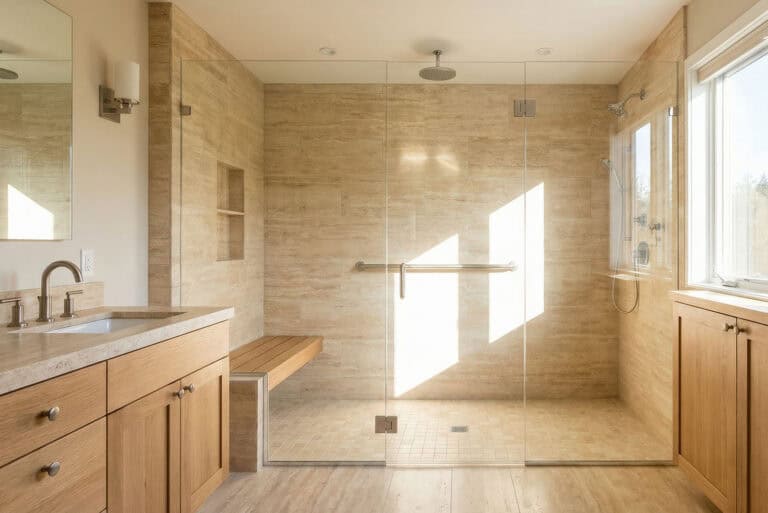
If you mostly use your bathtub as a place to stand while showering, you may have wondered whether you really need it. Would a shower be more comfortable? Easier to enter? More useful as your needs change?
At RanD Remodeling, replacing a bathtub with a shower is the number one reason homeowners tell us they’re choosing to remodel their bathroom.
A tub-to-shower conversion can be a worthwhile improvement. But the right choice depends on how you use your bathroom, your budget, and your plans for your home. Before choosing tile and fixtures, here are a few things to consider.
Start With How You Use the Bathroom
Do you enjoy taking baths? Do children or grandchildren regularly use the tub? Is it the only bathtub in your home?
If your tub gets regular use, keeping it may make sense. If you rarely use it and stepping over the side has become inconvenient, a shower may better suit your daily routine.
Removing a tub doesn’t necessarily make the bathroom larger. What it can do is turn the existing bathing area into a space that works better for you.
What About Resale and Changing Family Needs?
You may have heard that every home needs at least one bathtub for resale. We wouldn’t treat that as an absolute rule, but we wouldn’t dismiss it, either. Some buyers want a tub for children or soaking, while others prefer an easier-to-enter shower.
Your household’s needs matter, too. If an older parent is moving in, or stepping over the tub wall has become difficult for you, replacing the tub may make everyday bathing more manageable. A thoughtfully designed shower can include a low or curbless entry, seating, reachable controls, and properly installed grab bars.
If you plan to stay in your home for years, give your comfort and changing needs real weight in the decision. If you expect to sell soon and would be removing your only bathtub, ask a local real estate professional about the tradeoffs for your particular home.
Having another tub gives you more flexibility, but there isn’t one answer that fits every household.
Curbless or Low-Curb: Understand Your Options
A curbless shower has an entry that is level with the bathroom floor, eliminating the need to step over a raised curb. It can make access easier and give the room a more open appearance.
However, it isn’t a simple swap in every bathroom. The existing floor construction and plumbing help determine what is possible. Proper slope, waterproofing, and splash control are essential.
A shower with a low curb is another option worth discussing. Understanding the feasibility and cost of both can help you decide where to spend your budget.
Your Existing Drain May Offer a Cost-Saving Opportunity
Moving plumbing can add to the cost of a renovation. If the existing drain location works for the new shower, keeping it in place can save money.
A linear drain may be a particularly good fit for that layout. It can provide a clean appearance and, with the right placement, allow the shower floor to slope in one direction.
The existing plumbing still needs to be checked for suitability. Ask whether the drain can stay where it is, what modifications are necessary, and how the available options compare in cost.
Take Advantage of Having the Walls Open
While the walls are open, it’s also a good time to add wood blocking—such as 2x4s where appropriate—for grab bars and a wall-mounted shower seat. These features need secure support behind the finished wall, so their placement and support requirements should be planned before tiling. Even if you don’t want them installed now, preparing for them can make future additions easier.
It’s also a great time to consider a shower niche. A recessed niche provides storage for shampoo, soap, and other essentials without a shelf projecting into the shower.
Think about its placement and size: will your tallest bottles fit, and can you reach them comfortably?
The plumbing controls often need to be raised when converting a tub to a shower. This is an opportunity to choose a comfortable control height and review the showerhead height—especially for taller people.
It’s also the time to discuss changing fixture brands. A new trim set may require a different valve inside the wall, so making that decision before the walls are closed can avoid extra work later.
Choose Seating and Fixtures Around Your Routine
A shower seat can be useful for washing your feet, shaving, or taking a break while bathing. A folding teak seat saves space when not in use, a tiled bench provides permanent seating, and a freestanding shower seat offers flexibility.
Consider comfort, available room, cleaning, and maintenance. Any seat should be designed for shower use and have the appropriate support and weight rating.
For fixtures, think beyond appearance. A rainfall showerhead may appeal to you, while an adjustable handheld showerhead can be useful for seated bathing and rinsing the shower when cleaning.
If you choose more than one showerhead, ask how the controls work and whether you can use the heads separately or together.
Small Finishing Details Make a Difference
Tile edging profiles, such as those made by Schluter, can give a shower a clean, modern finish. They protect exposed tile edges and create neat transitions around niches, corners, and other tiled details.
Available in different profiles and finishes, they can coordinate with your fixtures or provide a subtle accent. It’s a detail worth discussing during tile selection, since the profile needs to suit the tile’s thickness and where it will be installed.
These finishing choices don’t have to be elaborate to make the shower feel thoughtfully put together.
Put Your Priorities First and Gather Some Ideas
You don’t need every available upgrade to create a comfortable, attractive shower.
Start by identifying what matters most: easier entry, useful storage, more room to move, less cleaning, or staying within a particular budget. Separate your must-haves from the features you would enjoy if the budget allows.
Then do a little research. Pinterest, Houzz, and Google Images can help you discover styles, layouts, and details you like. Save a few examples and make a note of what appeals to you in each one—perhaps the tile color, niche placement, seating, or glass enclosure.
Those pictures are a helpful starting point for a conversation about what will work in your bathroom and what it will cost.
Plan for Everyday Comfort
Good lighting, flooring suitable for wet shower use, reachable storage, and properly installed grab bars all deserve attention.
And grab bars don’t have to make your bathroom look like a hospital. There are modern designs and finishes that coordinate with your faucets and other accessories, making them a thoughtful part of the room.
If you don’t need grab bars now, consider adding support inside the walls for future installation. Planning ahead while the walls are open can make later changes easier.
The best bathroom for you is one that fits your daily life. For some homeowners, that means keeping the tub. For others, it means replacing it with a thoughtfully planned shower.
In our next installment of Nailed It!, we’ll explore remodeling trends—including modern grab bars and other bathroom accessories that bring style and everyday practicality together.